How our identities keep us stuck

As we grow and learn to navigate the world, identities serve an important function by giving us a greater sense of who we are. Identities can help us organize who we are, understand our values, and understand the communities we belong to and how we operate in our lives. As important as it is to understand the identities we hold, relating to them as fixed or permanent can limit our growth and make certain challenges feel harder to navigate.
When we believe we are just one thing
We are complex, evolving beings living in an ever-changing world. When we define ourselves through a set identity, we can unintentionally narrow what’s possible for us. Without the flexibility to revisit and reimagine who we are, we may find ourselves in situations that feel misaligned with our deeper truth.
Over time, this can become a form of rigidity that constrains growth, limits our capacity to adapt, and leaves us feeling stuck, disconnected from ourselves, and weighed down by a quiet, persistent suffering.
“I am someone who doesn’t make mistakes.”
“I am someone who doesn’t get a divorce.”
“I am a winner” or “I am a loser.”
“I am a fit person,” or “I am just lazy.”
“I am a good person.”
“I am an artist.”
To be clear, having identities is not inherently problematic. They help us make meaning of who we are and how we move through the world. The difficulty lies in how tightly we attach to them and how much of our self-worth becomes tied to maintaining them.
When an identity becomes something we must protect, it can subtly shape how we see ourselves and the world around us.

We may begin filtering our experiences through it, reinforcing certain narratives while overlooking others. This can create blind spots that are difficult to recognize, especially when the identity feels central to who we are.
Identities rooted in changing circumstances, roles, achievements, and relationships can feel especially fragile. When those inevitably shift, it’s not just the external change that’s disruptive; the internal sense of self also feels unsettled.
Rather than allowing our identities to evolve alongside us, we may find ourselves oriented toward preserving a version of ourselves that no longer fully fits, creating tension between who we’ve been and who we’re becoming.
Where Do Identities Really Come From?
It can be just as important to explore where our identities come from as it is to question how we hold them. Many of the ways we define ourselves didn’t emerge in isolation; they were shaped over time, through relationships, environments, and the need to adapt.
Some identities may feel deeply “ours,” yet were influenced by family expectations, cultural narratives, or what once helped us belong, succeed, or stay safe. A career path may reflect genuine values, or an internalized story about who we’re supposed to be. Being “the quiet one” might be an expression of temperament, or it might be something we learned in response to a louder, more unpredictable environment.
These distinctions aren’t always obvious. But gently examining the origins of our identities can open up space - space to discern what still feels true, what may have been inherited, and what might be ready to evolve.
In NARM (NeuroAffective Relational Model), therapists support clients working through complex trauma by strengthening agency and cultivating what is often called “adult consciousness.” A key part of this is helping individuals clarify and choose what they want for their lives. When we take time to reflect on the identities we hold, and whether they align with our values, we create the possibility of living with greater intention.
The more awareness we bring to how our identities are formed and maintained, the more freedom we have to live in ways that feel authentic to us.
So What Can We Do?
There isn’t one single way to explore identity, but one meaningful path is through Internal Family Systems (IFS) parts work. This approach invites us to see ourselves not as a single, fixed identity, but as a system of many different parts, each with its own perspective, role, and intention.
In IFS, no part is bad or needs to be eliminated. Every part is understood as having developed for a reason, often to help us cope, belong, or stay safe. By building relationships with these parts, rather than identifying completely with any one of them, we can begin to understand ourselves with more clarity and compassion.
Start working with an IFS Therapist in Highland Park and Los Angeles
Over time, this can soften internal “noise” and create more space. Space to respond rather than react. Space to choose how you want to show up in your life, rather than feeling bound by a single story about who you are.
As Walt Whitman once wrote, “I am large, I contain multitudes.” You are not a fixed identity; you are a dynamic, evolving system capable of holding many truths at once.
Reach out to schedule a free 15-minute consultation and see if this type of therapy approach is a fit for you.
Other Services Offered at Therapy on Fig
At Therapy on Fig, we provide therapy services tailored to the unique needs of couples, adults, and teens. We offer Neurodivergent Affirming Therapy, IFS Therapy, Therapy for Empaths, Trauma Therapy, Couples Therapy, Teen Therapy, ADHD Therapy, Group Therapy, Therapy for Entrepreneurs, Anxiety Therapy, Therapy for Autistic People, and Therapy for Asian Americans. Whether you're seeking support for a specific issue or looking to strengthen your relationship overall, our therapists are here to help. Reach out today to learn more about our services!
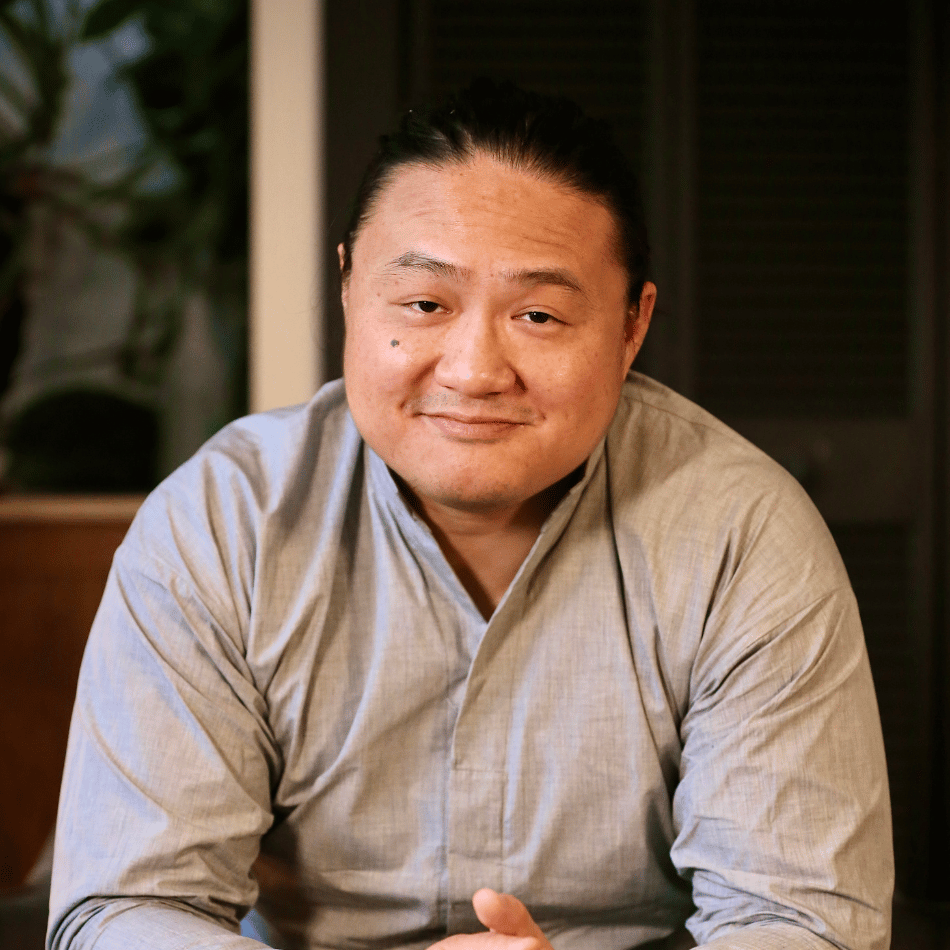
Michael Hung is an Associate Marriage and Family Therapist #154058, supervised by Phillip Chang, LCSW #92156. He is trained in Internal Family Systems (Level 1) and in modalities rooted in a somatically based, trauma-informed approach, such as the Neuroaffective Relational Model (Level 2), Intimacy from the Inside Out (IFIO), and the Gottman Method.