How to be lonely in LA
Los Angeles can make building a community unusually hard. The city is spread out; we spend a lot of time in cars, and many people work alone from home. Getting together requires more planning, more driving, and more coordination than it would in a denser city. Spontaneity is harder. And if you are new to LA, you may quickly notice that many people already have established friend groups and full schedules. They may be friendly and open to newcomers, but they are not necessarily looking to build a new social world from scratch.
Read More
The struggles of a creative
Current shifts in the industry, the use of Artificial Intelligence, and the struggle to earn a living amid rising costs are just some of the major stressors that can interfere with a creative's ability to engage in their art and threaten the very identity they've built around it. These stressors can put creatives in a constant fight-or-flight state of survival. When your art and your livelihood are the same thing, the very real fears of uncertainty become obstacles not just to safety and balance, but to a sense of who you are.
Read More
Healing with Nature :: Lessons from Mother Earth
We see the importance of connection reflected across different therapeutic modalities. In Internal Family Systems (IFS) therapy, we tend to internal relationships, bridging connections between parts and Self. In psychodynamic therapy, we connect the present moment to past experiences. In relational therapy, healing occurs in the relationship between therapist and client. In somatic therapy, we find healing through the mind-body connection.
This makes sense. Everything we know exists within a web of relationships; we are inherently relational beings. Nature-based therapy extends this web of connection even further.
Read More
Your inner critic isn't the enemy. It's exhausted
“If I’m not critical or harsh on myself, I will fall behind.”
As the oldest Asian sibling who grew up in Asia, I’m no stranger to this thought. In my past lives before becoming a therapist, when I worked in the entertainment and corporate worlds, I operated from this belief. And now, even in my anxious moments (therapists have bad days too!), this part of me slips into old habits because it’s the ‘safest’ way to motivate me to be better.
Read More
Healing Generational Trauma Through IFS and EMDR
This combined approach is especially meaningful when working with cultural burdens. Many clients have internalized beliefs passed down through generations as survival strategies. First, we can honor the protective intention behind these parts’ beliefs; then, we can then help the nervous system release the intensity that keeps them locked in place.
Read More
Perfectionism and What It Might Be Telling You
Trauma-informed methodologies such as Internal Family Systems (IFS) and NeuroAffective Relational Model (NARM) operate on the fundamental principle that:
Healing can occur once we understand and build relationships with the parts and survival strategies we have developed to navigate life
Read More
Nature-Based Therapy: Your Body Wants to Be Outside
One is the descent — the deep, internal work of getting to know the landscape of your soul. The other is the ascent — the remembering that you are part of a web of interconnectedness with all other living beings here on Earth.
To me, to heal is to be able to stand in the present moment, holding both of these dimensions at the same time – the stories that make you uniquely who you are, and your undeniable belonging in the family of everything – without needing to change anything.
Read More
How our identities keep us stuck
Identities rooted in changing circumstances, roles, achievements, and relationships can feel especially fragile. When those inevitably shift, it’s not just the external change that’s disruptive; the internal sense of self also feels unsettled.
Rather than allowing our identities to evolve alongside us, we may find ourselves oriented toward preserving a version of ourselves that no longer fully fits, creating tension between who we’ve been and who we’re becoming.
Read More
IFS Intensives
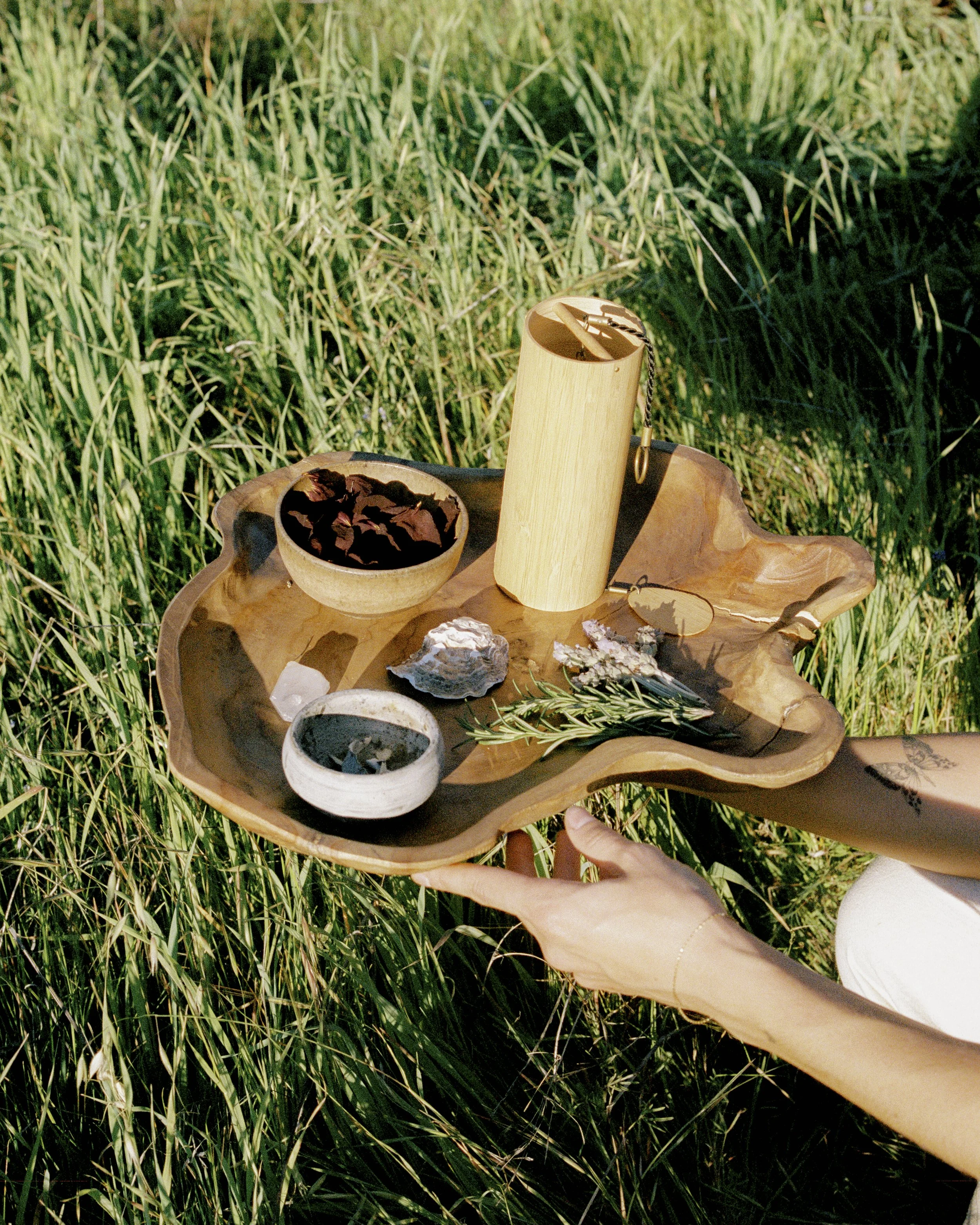
My sessions take place outdoors. In addition to my experience as a clinical counselor, I have backgrounds and training in nature therapy, yoga, mindfulness, somatics, and sound healing. I hold intensive sessions in nature because it helps our nervous systems relax. There are so many studies that show how spending time in nature reduces stress, anxiety, depression, and even cognitive challenges such as memory loss and symptoms of ADHD. But I really think it boils down to this: we are animals. Our nervous systems evolved in connection to the land. There is an undeniable natural homecoming that happens when we feel safely connected to the natural world.
Read More
What is C-PTSD, and the possible ways to heal
Many people come to therapy seeking support for what looks like depression, anxiety, struggles with substance use, or patterns that feel hard to understand. Over time, we sometimes discover that these experiences are rooted not in separate problems, but in the lasting impact of relational and developmental trauma that shaped how the nervous system learned to cope and survive.
Read More
When Parts Run Away By Moving To A New Place
In ATK environments, parts of us that cope by creating distance through movement are often normalised, even reinforced, by a shared culture of leaving. But in adulthood, this fragmentation tends to surface more clearly as relationships require authenticity, congruence, and self-awareness. Maturity asks something different of us: the capacity to stay, to remain present, and to repair relational ruptures as they arise.
Read More
Late-diagnosed autistic women masking with food
If you grew up autistic without knowing it, you likely learned early that the world responded more warmly when you hid certain parts of yourself. Maybe you softened your voice, monitored your facial expressions, copied social cues, or worked hard to appear “easy,” “low-maintenance,” or agreeable. These adaptations weren’t vanity or superficial - they were survival.
Read More
The New Year Doesn’t Have to Begin with Becoming
The holidays have come and gone, and as the new year begins, many feelings, associations, and meanings may still linger. For some, the holiday season offered warmth, connection, and a much-needed pause after a long, exhausting year. For others, the days leading up to and following the holidays can stir complex, confusing emotions that don’t neatly resolve once the calendar turns. As the world rushes forward into January, many parts within us may still be catching up.
Read More
The Limitations of Affirmations: Why Positive Self Talk Might Help but Doesn't Always Heal
Positive affirmations can paradoxically create more distress. Rather than feeling empowered, they experience cognitive dissonance—an uncomfortable tension that arises when conflicting beliefs are held simultaneously within. The more vigorously one part of themselves attempts to embrace positive thinking, the more resistant another part becomes, as if an internal rebellion is taking place.
Read More
From Pain to Protection: How Our Early Experiences Shape Our Relationship with Food
In Internal Family Systems (IFS) therapy, we see that eating struggles are rarely about food.
They’re about protection.
Early experiences, especially the ones that left us feeling unseen, unsafe, or not enough, can plant the seeds of protection. Younger parts of us carry pain, fear, or shame that once felt too heavy to hold. Other parts step in to manage that weight through control, criticism, perfectionism, or numbing. These patterns aren’t evidence of brokenness. They’re evidence of survival: of a system that found a way to keep going.
Read More
When Success Isn't Enough: Understanding the Inner World of High Achievers
Many high achievers carry an internal narrative that sounds like this: "If I could just do more, succeed more, become more, then I would feel good." The problem is that the bar keeps rising. They hit one goal and immediately start reaching for the next.
This kind of internal system isn't flawed – it's adaptive. Somewhere along the way, these parts learned that being competent, successful, or impressive was the safest way to exist.
Read More
Understanding Orthorexia: The Overlooked Eating Disorder
In a culture that idealizes clean eating, self-discipline, and wellness, it’s easy to overlook when a desire to be healthy begins to cause harm.
Orthorexia is a lesser-known but increasingly common form of disordered eating that often starts from a well-intentioned place, yet can gradually consume a person’s energy, identity, and peace of mind.
Read More
How IFS Therapy Can Offer an Affirming Approach to ADHDers Struggling with Friendships
Human beings are fundamentally wired for connection and belonging. While much of our cultural conversation around relationships focuses on romantic partnerships, the reality is that platonic friendships are equally vital to our emotional wellbeing and sense of self. For individuals with ADHD, navigating the complex landscape of friendship can present unique challenges that often go unrecognized or misunderstood, leading to cycles of shame, rejection, and isolation.
Read More
Untangling Identity from Career
“I don’t want to be an engineer anymore. But then, who would I be?”
“When I got laid off, I didn’t just lose my job -- I lost myself.”
“If my business doesn’t succeed, I am a failure.”
Many of my clients discuss career-related stressors. While their industries, backgrounds, and lived experiences vary widely, almost all of them share a commonality:
Read More
Unlearning Inherited Shame: A Journey Back to the Body
As I work with clients experiencing body dysmorphia and disordered eating, I often witness how deeply rooted shame lives inside them. Shame doesn't appear out of nowhere - it is inherited, absorbed, and rehearsed in relationships, both personal and cultural. The parts of us that monitor our appearance, compare our bodies, restrict our appetites, or harshly criticize our physicality often have histories that extend beyond our individual lives.
Read More
![74 [Converted]-02.png](https://images.squarespace-cdn.com/content/v1/5b2ab66e75f9ee77b85431ad/1620761682426-P4M5BQH61X4D2ZHS7A8W/74+%5BConverted%5D-02.png)