Late-diagnosed autistic women masking with food

Many late-diagnosed autistic women come into therapy wondering why their relationship with food and their body feels so layered, confusing, or shameful. When you’ve spent a lifetime masking, enduring microaggressions, or trying to decode a world that didn’t understand you, your protectors get creative. Food, appearance, and control can become ways to feel safer in a body and social world that hasn’t always felt predictable or kind.
Masking as Survival
If you grew up autistic without knowing it, you likely learned early that the world responded more warmly when you hid certain parts of yourself. Maybe you softened your voice, monitored your facial expressions, copied social cues, or worked hard to appear “easy,” “low-maintenance,” or agreeable. These adaptations weren’t vanity or superficial - they were survival.
In an IFS lens, these were protective parts doing the best they could with the environment around you. They learned that masking reduced conflict, confusion, and shame. Over time, these protectors blended so deeply that you were likely unaware you were masking anything.
What often gets missed is how this masking can spill over into your relationship with food and body. Parts that work tirelessly to “fit” socially may also push you to “fit” visually, creating pressure to mold your body into something that feels less vulnerable in a world that misunderstood you.
Food rules are comforting to autistic minds that want structure, predictability, and clarity.

When you combine this with a lifetime of emotional overwhelm or relational instability, it makes sense that you would lean on food rules to create a sense of order.
These rules may look like:
Only eating certain “safe” foods
Tracking or counting to feel in control
Avoiding eating in front of others
Restricting to reduce sensory overload
Relying on rigid routines around meals or body movement
To outsiders, these rules can look like pathology. But for your inner world, they’re often management strategies: using structure to protect you from uncertainty and judgment. Instead of body hatred, it’s a need for grounding when the world feels overwhelming.
You may have been bullied on top of being criticized by your parents growing up
If you were teased for your intensity, sensitivity, “weirdness,” food preferences, or the way you moved in the world, those experiences didn’t fade when you grew up. They became exiles, parts of you still holding fear, humiliation, and the belief that something about you is “too much” or “not enough.”
Bullying wasn’t the only source of these wounds. Many late-diagnosed autistic adults also endured inconsistent, chaotic, or emotionally unpredictable homes. Maybe caregivers dismissed your sensory sensitivities, criticized your eating, or expected you to “just be normal.” Maybe you walked on eggshells around a parent’s mood, learned to manage other people’s emotions, or felt chronically misunderstood or unseen. These experiences taught certain parts of you that staying small, controlled, or invisible was the safest option.
Over time, those injuries accumulate, resulting in you using eating and body-focused strategies to stay safe by staying small, blending in, etc., so that you can avoid being hurt, singled out, or misunderstood again.
Your body becomes a social shield
When you’ve spent years trying to read the emotional landscape of every room you walk into, your relationship with your body can become layered and complex. You may not be striving for thinness in the traditional sense. Instead, you may believe:
“If I look more acceptable, people will treat me better.”
“If my body fits in, maybe I finally will too.”
“If I’m smaller or quieter, I’ll draw less attention—and less threat.”
“If my appearance feels controlled, maybe my life will too.”
For many late-diagnosed autistic adults, especially women and AFAB people, the body becomes a mask of its own, an external attempt to reduce internal difference.
This isn’t vanity; it’s relational survival. These protector parts learned that your appearance could influence the extent of harm, rejection, or confusion you might encounter. When that belief takes root, eating and body-focused strategies can feel like armor.
Start working with a neurodivergent affirming therapist in Highland Park and Los Angeles
When we explore these patterns together, we never force these protective ways to change. We want to know them as protectors, as if they were individual people with their own histories, complexities, and motivations. With curiosity, respect, and patience, my goal is to create a non-judgmental, neurodivergent-affirming space so you can shift your relationship with your body and food in ways that feel gentle and genuinely freeing.
Reach out to schedule a free 15-minute consultation with a neurodivergent affirming therapist who understands the unique realities of late-discovered or diagnosed autistic experience.
Other Services Offered at Therapy on Fig
At Therapy on Fig, we provide therapy services tailored to the unique needs of couples and individual adults and teens. We offer Neurodivergent Affirming Therapy, Group Therapy, Therapy for Entrepreneurs, ADHD therapy, IFS therapy, Grief and Loss Therapy, Therapy for Empaths, Trauma Therapy, Couples Therapy, Therapy for Asian American People, and Teen Therapy. Whether you're seeking support for a specific issue or looking to strengthen your relationship overall, our therapists are here to help. Reach out today to learn more about our services!
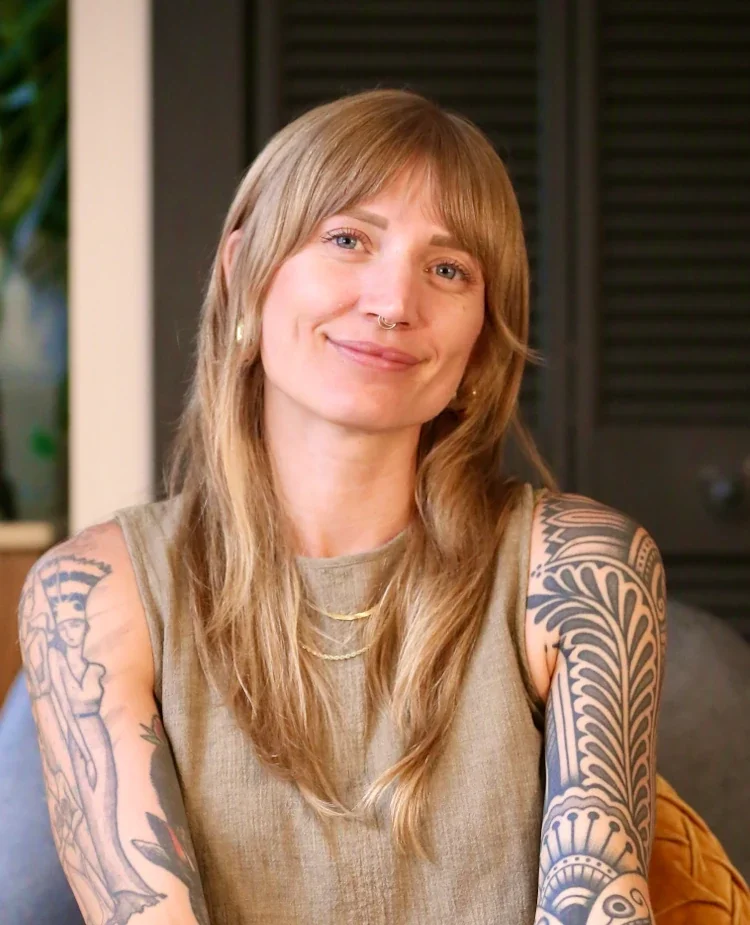
Gabriella Elise Giorgio is a Registered Associate Marriage and Family Therapist (AMFT 140682), supervised by Sharon Yu. As a highly sensitive person and a mother, she helps individuals recover from childhood attachment injuries, couples navigate significant life changes, and those who struggle with disordered eating. Reach out to learn more about our experienced therapists.