When Parts Run Away By Moving To A New Place

Before my work as a therapist, I led community groups in churches all over the world and was that “big sister” for many friends across different cultures and countries, and I became intimately aware of the secrets and the shame many of us carry in our bodies, in our memories, in our blood and lineage.
I noticed that for Adult Third Culture Kids or ATKs and immigrant communities, the experiences of trauma and the associated guilt and shame would be temporarily relieved due to moving from place to place. And this is because their traumatic memories are tied to a specific time and place, often in an entirely different city or country.
At first, leaving can feel like freedom, putting distance between ourselves and the places where pain once lived. But in moving away from trauma, we also move away from parts of ourselves.
When moving away becomes a pattern, it may surface not as relief, but as relational disconnection: avoidance, dissociation, or the quiet habit of people-pleasing.
In ATK environments, parts of us that cope by creating distance through movement are often normalised, even reinforced, by a shared culture of leaving. But in adulthood, this fragmentation tends to surface more clearly as relationships require authenticity, congruence, and self-awareness. Maturity asks something different of us: the capacity to stay, to remain present, and to repair relational ruptures as they arise.
Here are a few illustrative examples:
A diplomat’s child grew up attending international schools, rotating between countries every two to three years. In some schools, they were bullied; in others, briefly popular; in most, largely invisible. They flourished in their final placement, but by adulthood, the pattern had already taken hold. Throughout their twenties and thirties, they never went on a single date, despite a genuine desire for romantic connection. The fear of the unknown and of relational risk felt overwhelming.
A missionary’s child experienced sexual harassment during childhood by a neighbor in the village. She chose not to tell her parents at the time, fearing the neighbor might lose the church’s financial support. After her family left the mission field, she framed the experience as “forgiven” and “in the past,” telling herself it no longer mattered because she would never return there, leaving the impact of the trauma largely unprocessed.
An oil industry child, raised within a wealthy family empire, had his painful experiences consistently minimized because he was perceived as privileged, someone who “had it all.” As an adult, he feels most understood by other oil kids and struggles to connect with people outside third-culture spaces, sharing that “everyone else judges me as my family did.” This sense of isolation keeps him emotionally and financially tethered to a family system he experiences as toxic, yet difficult to leave.
When disconnection from Self is normalized by the ability to move away, for many adult third culture kids, this shapes a protector strategy in which movement becomes the primary response to discomfort. For many ATCKs, adulthood brings a familiar question: “Where should I move next?” This often serves as a way of asking, “How can I create distance from this pain?”

As an adult third-culture kid myself, with strong parts that learned to survive by running, I’d like to offer that we don’t have to keep running forever, and healing doesn’t require freezing in place either. More often, it begins by slowing down.
What’s frightening about slowing down is that the parts we’ve worked so hard to outrun start to come back into focus.
Much like how your vision sharpens when you shift from running to walking, forgotten parts of us begin to feel real again. They remind us why we started running in the first place, and the instinctive pull is to pick up speed, to escape once more.
What if you didn’t have to face those parts alone anymore?
Start working with a culturally responsive IFS therapist in Highland Park, Los Angeles
Therapy with me is a rehearsal space, a place to practice a new way of being. Together, we work toward integrating the many parts of you so that you can experience the fullness of being alive and in relationship, without abandoning yourself.
This is a brave space where we gently remember and reconnect with what was left behind; where we’re allowed to try, fail, and try again; where resilience is built through presence rather than escape; and where secrets are slowly rewritten into stories that can be held, witnessed, and shared. Reach out to schedule a brief initial consultation.
Other Services Offered at Therapy on Fig
At Therapy on Fig, we offer therapy services that fit the unique needs of couples and individuals. In addition to IFS Therapy, we offer Neurodivergent Affirming Therapy, ADHD Therapy, Therapy for Entrepreneurs, Group Therapy, Therapy for Empaths, Trauma Therapy, Teen Therapy, Therapy for Asian Americans, and Autistic People. We also address related issues such as anxiety, stress management, and relationship issues. Whether you're seeking support for a specific issue or looking to strengthen your relationship overall, our therapists are here to help. Reach out today to learn more about our services.
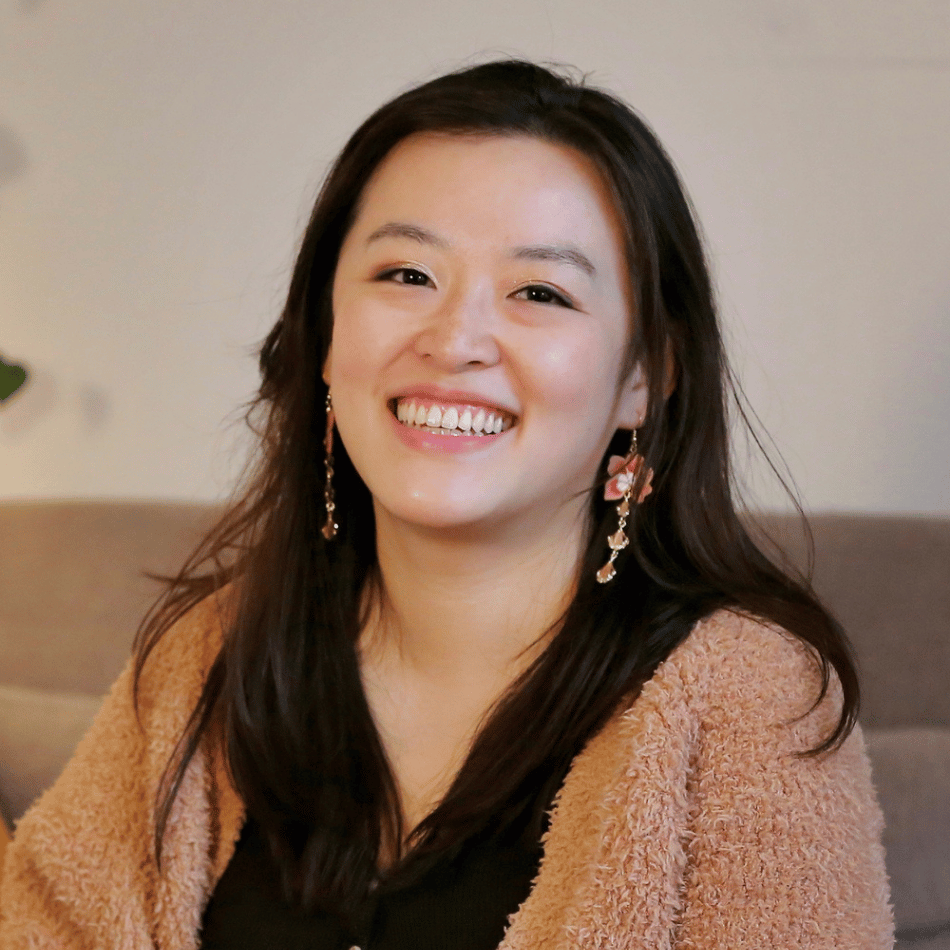
Grace Chan is an Associate Marriage and Family Therapist (#142670), supervised by Phillip Chang, LCSW #92156. She is trained in Brainspotting and Prepare/Enrich Premarital Counseling. She integrates Internal Family Systems (IFS) with creative arts therapies to support individuals and couples in deepening their connection to themselves and each other. Reach out to learn more about our experienced therapists.