The Asian American Mother Daughter Wound
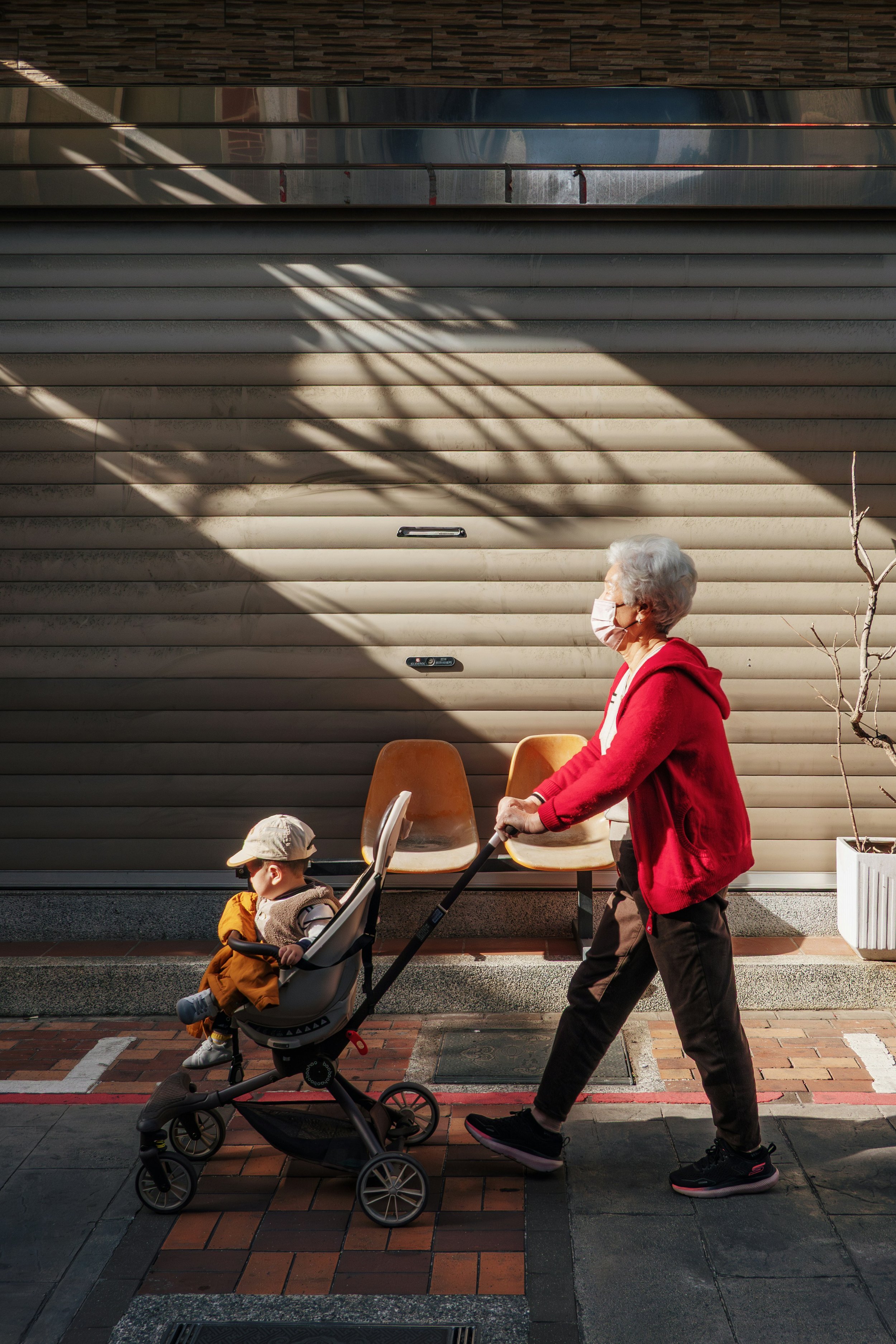
That moment captures a dynamic many of us Asian American women grew up with: our mothers reaching for us in ways that were clunky and mismatched across a cultural and generational divide. I think that's why the Korean drama When Life Gives You Tangerines hits so many of us so hard. It shows a Korean mother's protective, sacrificing love without her ever saying "I love you."
Read More
The youngest daughter, part 2: the roles we didn't choose
When I wrote about the youngest daughter back in June, we looked at how youngest daughters are often reduced to a single story - the “baby” of the family, the “distractor” to relieve conflicts in the home, or simply living in the oldest sibling’s shadows - when the reality in the therapy room is usually far more layered. In this second installment, I continue exploring the roles youngest daughters often find themselves playing: the emotional sponge, the lost child, and the "eldest" youngest daughter.
Read More
The youngest daughter
In contrast, youngest daughters are often thought of as spoiled, “the baby of the family,” and having it easy growing up. Although this can certainly be true, I often hear a different, more nuanced story from youngest daughters in the therapy room, and one that they have rarely had the opportunity to express. Like all of us, they carry traits with both highlights and lowlights, strengths and weaknesses, parts with gifts and burdens.
Read More
When Parts Run Away By Moving To A New Place
In ATK environments, parts of us that cope by creating distance through movement are often normalised, even reinforced, by a shared culture of leaving. But in adulthood, this fragmentation tends to surface more clearly as relationships require authenticity, congruence, and self-awareness. Maturity asks something different of us: the capacity to stay, to remain present, and to repair relational ruptures as they arise.
Read More
Lessons I’ve Learnt from Traditional Chinese Medicine
In IFS, we talk about tapping into Self-energy to guide ourselves and our parts. Self-energy is the ultimate embodiment of yin/yang energy. When we are in Self, we have the wisdom and connectedness to access our ‘yang’ for confidence, clarity, and courage, or our ‘yin’ for curiosity, calmness, and creativity.
Read More
Honoring Your Parts During Holidays with Immigrant Parents
When clients prepare to visit home for the holidays, I often feel like a coach before a boxing match, reminding them of the boundaries we worked on together while they brace themselves for the visit.
Many describe the same experience: “I feel myself reverting,” or “I’m that little kid or teenager again.” Time at home can make clients feel as though the progress they’ve made in therapy slips back a few steps.
For BIPOC children of aging immigrant parents, relationships with our parents often carry a particular weight. They may have been close and supportive, strained, or even abusive, yet for many of us, the suggestion to “just cut them off” feels deeply offensive.
Read More
Before Therapy, There was Cultural Coping
A majority of the clients I see are first-generation cycle breakers. They are immigrants or children of immigrants trying to make sense of mental health and healing after a generation who had to focus on survival, acculturation, and assimilation in the U.S. Many were raised in collectivistic, shame-based cultures where therapy was never an option growing up.
While generational trauma is a common theme in therapy, I also believe generational gifts and strengths deserve to be highlighted and celebrated. As BIPOC individuals, we occupy a unique space where we sift through both worlds of cultural coping and modern mental health to discover what resonates for us.
Read More
Feeling Lost in Your 20s
So. You’re in your mid- to late-20s and realizing you’re not where you thought you’d be by now. Maybe you imagined that you’d have a clearer career path, a long-term partner, or feel a greater sense of purpose by this age. Instead, you’re catching yourself spending hours scrolling on social media, watching everyone else seem to have it together —and wondering why you feel like you’re falling behind. Welcome to the Quarter Life Crisis.
Read More
When Purpose Stops Being Something to Chase
But as we’ve moved toward a more secular, individualistic world, away from religious institutions and cultural roots, with the nuclear family valued above the “village,” purpose has become a personal endeavor. No one gets to tell you what your purpose is anymore. You get to create it.
The shadow of being free to define your own purpose is that when it doesn’t come easily, it can start to feel like something’s wrong with you, as if you haven’t done enough inner work to earn it.
Read More
Belonging as a Second-Generation Korean American
The cultural value of noonchi (눈치)—an intuitive awareness of others’ feelings and expectations—teaches us to read the room and adapt ourselves accordingly.
For many of us, that creates a confusing internal tug-of-war: the pressure to sacrifice ourselves for the greater good versus the desire to live authentically and express who we are.
Read More
Your first Saturn return
If your Saturn is in Aries* (or you are approximately 27-28 years old right now), congratulations! You have just begun one of the most transformative periods of your life: your first Saturn return.
If things are feeling emotionally heavy or overwhelming, you are in the right place. These next few years – through April 2028 – will challenge you to meet yourself more honestly than ever before. It won’t be easy, pretty, or clean – but you will get through it, and it will be worth it. How deeply can you trust the process of your unfurling? How might you learn to create safety for yourself today?
Read More
Once a Third Culture Kid, Now an Adult Third Culture Kid: Why Adulting Feels Harder
When you grow up identifying as a Third Culture Kid (TCK), it's hard to imagine one day becoming an Adult Third Culture Kid (ATCK). (It's me. I'm one of them!) But just as all kids eventually grow into adults, third culture kids do, too. And with that shift comes a new layer of complexity to an already complex childhood.
Read More
Slowing Down to Come Home
The first step to coming home to yourself is to slow down. When you slow down, you tell your body that you are safe. This process can also be referred to as downregulation. To downregulate is to intentionally transition from your sympathetic nervous system (fight or flight) to your parasympathetic nervous system (rest and digest). We need both systems to live a healthy life, but modern lifestyles often have us in "fight or flight" mode when it is not actually necessary, helpful, or adaptive. When we bring our parasympathetic system online, healing, creativity, and intuition can flow with ease, and we open access to our most authentic Self.
Read More
Interracial Relationships: The Unspoken “Mental Load”
We were always aware of the intercultural differences—he being of Puerto Rican and Nicaraguan heritage and having spent his whole life on American soil, me being Malaysian-Chinese who’s lived through a mixture of Eastern and Western influences in different countries and cities. We spent most of our dating life long-distance, so we rarely were ‘seen’ together. But as we reflected on that moment together, we realized another layer to our relationship we needed to unpack: Others see us first as an interracial couple.
Read More
Reframing Mental Health: A BIPOC-Centered Perspective
When we create a safe and attuned therapeutic relationship, we invite those deeper narratives to emerge: stories shaped by migration, resilience, systemic oppression, and cultural pride. As AAPI Heritage Month comes to a close, I'm reflecting on the need for therapy that moves beyond the myth of the "blank slate" therapist towards a dynamic, colorful, and culturally informed practice. Therapy that truly serves BIPOC clients seeks to decolonize the healing process by honoring culture, intersectionality, and lived experience.
Read More
Coming Home: We Lose Ourselves to Find Ourselves, Over and Over Again
You've heard it before: Just be yourself. Listen to your heart.
But it's not that easy. To truly be yourself requires a deep unearthing – a stripping away – of all the layers of identity that have been accumulated over the years from external voices. Parents. Culture. School. Peers. Social media. Society at large. The 21st century is over saturated with shoulds and should nots, can and can nots. Slowly, over time, and before we know it, we find ourselves wearing layers and layers of energetic jackets that are not ours. Though imperceivable to the eye, these layers weigh us down.
Read More
Trauma and Cultural Sensitivity: Incorporating Cultural Sensitivity in Therapy
Therapy can be incredibly healing because we feel heard and seen. Our pain is witnessed, not dismissed. The therapeutic space is held with compassion, not with judgment. We are held with care, not with indifference. Although these qualities may seem simple, a therapist can only effectively implement these skills if they are culturally sensitive. As some of you may relate, it can take so much from us to feel safe and comfortable enough to open up to someone. Some of us may have attempted to share vulnerable feelings and memories with others, which turned out to be a negative experience.
Read More
Generational Patterns in Asian Americans
…whenever you notice a particular feeling, belief, energy, or tendency in yourself, it might be worth exploring if it might be a generational pattern.
Some practical questions to ask yourself:
"When did I develop this feeling or belief? Or does it feel like it's just always been there?"
"Who else in my family had this feeling, belief, or tendency? Do I see this in my grandparents or extended family as well?"
"Is this my feeling, or is it theirs?"
Read More
What “Turning Red” Reveals About Asian Mental Health
Disney’s first Asian-led animated movie “Turning Red” beautifully captures the life of Mei Lee, a 13 year-old Chinese Canadian adolescent. Mei struggles to embrace her independence and pursue her interests, while also honoring and respecting her mother’s wishes for her life. As an Asian American child of immigrants, I found myself relating to Mei and the conflicts she faced.
Read More
![74 [Converted]-02.png](https://images.squarespace-cdn.com/content/v1/5b2ab66e75f9ee77b85431ad/1620761682426-P4M5BQH61X4D2ZHS7A8W/74+%5BConverted%5D-02.png)