Lessons I’ve Learnt from Traditional Chinese Medicine

Right around the time that I joined Therapy on Fig, I also started a podcast, “TCM Talk Therapy”, with a dear friend of mine, Dr Jennifer Ng. It’s been a fulfilling adventure, navigating and balancing this passion project, our clinical practices, and our personal lives with Jen.
As I reflect on my past year, I wanted to share 3 pieces of wisdom I’ve learnt so far in creating this podcast, in hopes that it offers you a new sense of grounding and openness as you prepare for the year ahead.
Moving with the Seasons
Personally, I grew up in urban areas and with a mentality of ‘pushing through’. So when I learnt about living in tune with the seasons through my time with Jen, I finally understood my body better, like why I would have extra digestive issues in the summer. I was not allowing my body to adjust to its environment because I was so used to ignoring symptoms.
While I’ve learnt to apply seasonal living in my personal life, this new understanding has helped my clinical work. I anticipate and prepare accordingly as the seasons change: the rise in motivational charge in the spring, the anxious scatteredness of the summer, the weight of grief in the fall, and the pensive intensity of the winter. When a client’s habits and behaviours are incongruent with the season’s energy, i.e. being more serious and isolated in the summer, where it’s all about “fun” and “extraversion”, then I’m able to offer knowledge to help them become more in sync with the environment around them, flowing with the seasons instead of working against nature’s rhythms.
We cover the basics of seasonal living in our first episode because awareness of the seasons is foundational to TCM, and we return to this concept often in our other episodes.
The Concept of Yin/Yang
Growing up in Asia, the black-and-white symbol of yin/yang is so ubiquitous that I never gave it a thought. Perhaps the most thought I gave it my whole life before this podcast was the episode in Avatar: The Last Airbender (the animated one - we don’t acknowledge the live action one) where the symbol was represented with two fishes, Tui - the white fish representing yin energy, and La - the black fish representing yang energy, circling each other in a pond.
We reference that mental image from Avatar in the podcast because it is a perfect way to understand the concept of yin and yang. Yin/yang is about the balance of an eternal push and pull between the feminine yin and the masculine yang (Fun fact: Tui and La in Mandarin mean push and pull, respectively!). Yin/yang also helps us understand the world through its spectrum, where balance lies not in overpowering either yin or yang, but in their interplay.
In the hyper-patriarchal world that we live in, yang energy has mutated into an overpowering and destructive force that overshadows the gentler, nurturing nature of yin energy. The world is in desperate deficit of yin energy - introspection, reflection, intuitive awareness.

There are many ways for each of us to tap into more of our yin energy, but I love that one of the ways of gaining more yin energy in a hyper-yang world is through therapy! Because once yin energy is able to take up more space, yang energy is able to settle down and become decisive instead of controlling, in service instead of defensive, authoritative instead of authoritarian.
In IFS, we talk about tapping into Self-energy to guide ourselves and our parts. Self-energy is the ultimate embodiment of yin/yang energy. When we are in Self, we have the wisdom and connectedness to access our ‘yang’ for confidence, clarity, and courage, or our ‘yin’ for curiosity, calmness, and creativity.
The Integration of Ancestral Knowledge and Modern Science
Perhaps the biggest gift of doing this podcast is growing into a part of my culture I never had curiosity towards.
I grew up second-generation in the Christian church in Asia, where I was encouraged to elevate Western knowledge and ignore the ‘pagan’ and ‘woo-woo’ traditions of the Chinese diaspora in Malaysia because my Christian identity is more important than any other identity I hold. There are so many layers to my story that I can’t dive into within a blog post, but I think this sentence sums up my feelings for now: while I’m grateful that my childhood church was one that encouraged rational reasoning from Western education so that I have a full belief and integration of science and psychology with elements of faith and theology, I’m also continuously reckoning that there is a darkness to the history of Western Christianity that resulted in destroying people and their cultures amongst many other horrors (hence why I say religious decolonisation rather than deconstruction), and that part of Christianity has severed my relationship to my Chinese identity, history and lineage.
Because of this universal feeling of disconnection stemming from colonialism's legacy, the joy of being a therapist is that I get to do the work of reconnection. Clients get to reconnect with their forgotten parts, with their inner child and their ancestors. Couples and families find their way back to each other and communicate from their hearts and their guts. We move away from resentment and regret so they can rediscover their purpose in the here and now, fully alive in the life they get to experience.
Start Working With an Asian American Therapist in Los Angeles, CA
One thing I love is that Traditional Chinese Medicine was developed through observation. Healers across generations spent their lives staying open to possible connections between seemingly disconnected parts of the body - for example, how did they figure out that the spleen is the organ that stores worry and overthinking? There may not have been scientific rigour as we know it now with peer reviews and sterile laboratories, but there was collaboration between healers and thousands of years of trial and error. So perhaps, the therapist parts of me resonate with the healers in my cultural lineage - the science of finding reason and connection, and the art of creative noticing and reflecting. After all, being a therapist is to witness, to observe, to be with, so that we may be able to connect, or reconnect, the disjointed parts of you into the wholeness of Self.
Reach out to schedule a free consultation.
Get matched and scheduled with an Asian American therapist on our team.
Other Services Offered at Therapy on Fig
At Therapy on Fig, we provide therapy services tailored to the unique needs of teens, adults, and couples. We offer IFS Therapy, Teen Therapy, Neurodivergent Affirming Therapy, Therapy for Empaths, Trauma Therapy, Grief and Loss Therapy, ADHD Therapy, Therapy for Autistic People, Therapy for Entrepreneurs, Therapy for Asian Americans, and Couples Therapy. We also address related issues such as anxiety, perfectionism, burnout, self-esteem, and relationship issues. Whether you're seeking support for a specific issue or looking to strengthen your relationship overall, our therapists are here to help. Reach out today to learn more about our services and to begin your path to healing, agency, and peace.
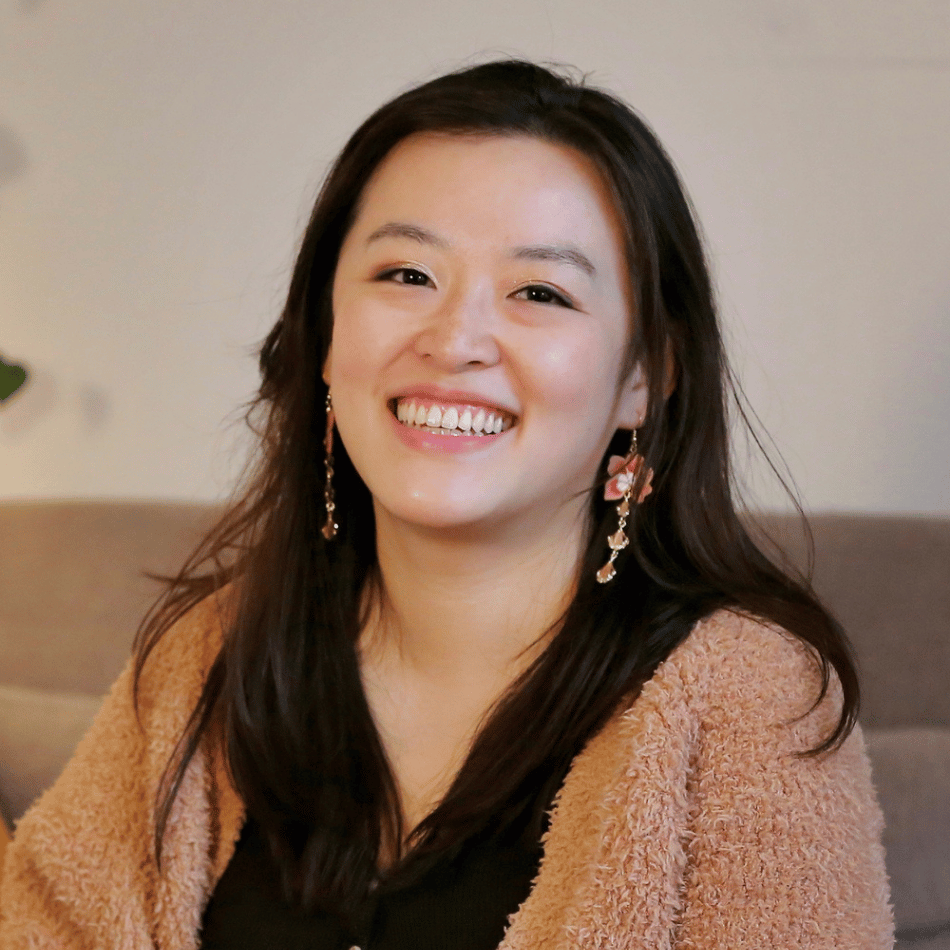
Grace Chan is an Associate Marriage and Family Therapist (#142670), supervised by Phillip Chang, LCSW #92156. She is trained in Brainspotting and Prepare/Enrich Premarital Counseling. She integrates Internal Family Systems (IFS) with creative arts therapies to support individuals and couples in deepening their connection to themselves and each other. Reach out to learn more about our experienced therapists.