Towards Understanding: Conflict, Context, and Crisis in Our Time

I recently re-listened to an episode of Prentis Hemphill’s podcast Becoming the People, with guest Dean Spade (“Threads of Connection with Dean Spade). In their conversation, the two explore dynamics and challenges that they see in how people are relating to each other - personally and collectively- in the context of this historical moment.
The podcast and my recent work with clients have left me reflecting on the resounding violence, uncertainty about our future as a species, socio-political division, and ecological decay that many of us are feeling in the world around us, and wondering about how these same struggles might be mirroring themselves in the context of our internal landscapes and interpersonal relationships.
I have been particularly feeling a heightened awareness of the binaristic impulse of our culture: our tendency to see and conceptualize our experiences through the lens of two opposing sides, opinions, belief systems, etc., and the felt need to identify oneself clearly with one perspective or the other. This black-and-white framework can offer a deep sense of safety, stability, and clarity that quiets the anxiety, fear, and discomfort presented by our global realities. Yet I am also curious about how it might increase our penchant for rigidity and sameness and limit our tolerance for people, realities, and feelings different from our own.
Establishing certainty amid real uncertainties can create a sense of predictability and steadiness, while also drawing us toward familiarity and making it harder to remain open to people and experiences that challenge what we know.
This same desire for agreement or similarity likewise regularly manifests itself in the context of couples and families. The feeling of difference might be experienced as rejection or emotional and relational distance, and in response, each member within the system further calcifies around their position. In turn, it often becomes harder and harder for us to acknowledge or respect the feelings of the other or to connect with the idea that difference does not have to translate to denial - people can have different emotional and lived experiences, and they can each be true and meaningful. In a recent talk, orator and grief practitioner Stephen Jenkinson astutely shared,
“You don’t need people who agree with you; that’s what you have yourself for.”

Great skill, then, lies in cultivating the capacity to see through moments of conflict over differences in your relationships and extend curiosity toward what is happening beneath the apparent disagreement. If each person can acknowledge and be open to the other's feelings and make an effort to understand, then the need to identify with a singular, staunch opinion dissipates. As we learn to hold difference in our relationships and partnerships, we might too come to embody this same stance towards our greater world. As Dean Spade shared, “we really need each other right now,” and “that’s the kind of stuff you need in a crisis - the ability to figure out what you can work together on across difference.”
Individuals, couples, and families are invited to bring their internal and relational conflicts to our work, and together we trace points of congestion and disconnection and build tools for greater understanding of self and other.
Start working with a couples therapist
For couples, differences can quickly become charged: one person may feel unheard, rejected, criticized, or alone, while the other feels blamed, misunderstood, or pressured to see things differently. What begins as a disagreement about one issue can harden into familiar patterns of defensiveness, withdrawal, escalation, or distance, until the conflict feels less about the original problem and more about whether each person feels seen, respected, and able to remain connected.
In therapy, we can slow down these moments and become more curious about what each person is protecting, longing for, or trying to communicate beneath the apparent disagreement. If conflict has begun to feel repetitive, polarizing, or difficult to move through together, therapy can create room for greater understanding and a different way of being with one another. Reach out to schedule a free consultation.
Other services offered at Therapy on Fig
At Therapy on Fig, we provide therapy services tailored to the unique needs of couples, adults, and teens. We offer Neurodivergent Affirming Therapy, IFS Therapy, Therapy for Empaths, Trauma Therapy, Couples Therapy, Teen Therapy, ADHD Therapy, Group Therapy, Therapy for Entrepreneurs, Anxiety Therapy, Therapy for Autistic People, Depression Therapy, Premarital Counseling, LGBTQ Affirming Therapy, and CPTSD Therapy. Whether you're seeking support for a specific issue or looking to strengthen your relationship overall, our therapists are here to help. Reach out today to learn more about our services!
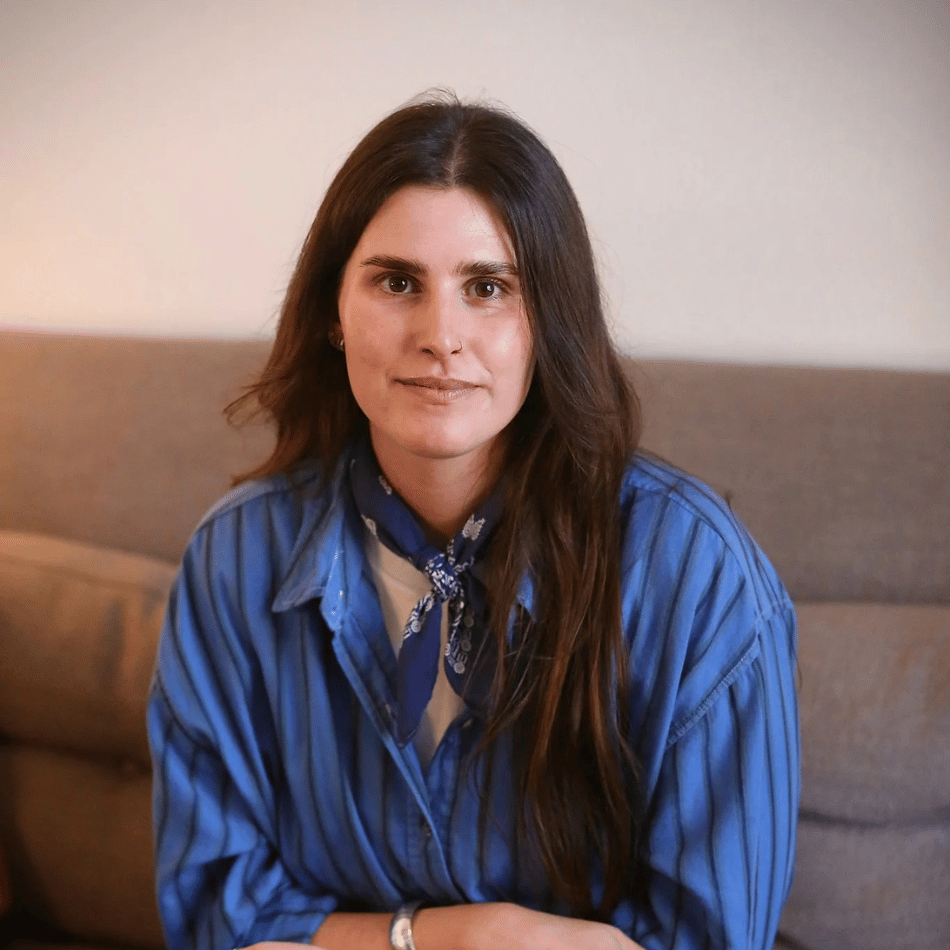
Emily Gaston is an Associate Marriage and Family Therapist #155211 and Registered Associate Professional Clinical Counselor #19502, supervised by Philip Chang, LCSW #92156. She practices from a relational, depth-oriented, and IFS-informed perspective that welcomes queer individual adults and teens and couples navigating relational and family-system trauma, moving through grief and loss.