When blending in becomes survival

There are many autistic women who were never recognized as autistic. Including myself.
We were recognized as weird, sensitive, and anxious. As mature for our age. As intense. As “a little too much,” or maybe not quite enough. Eventually, the wounds caused by these judgments cause protective parts to emerge - engaging in constant internal work in order to appear socially fluent, emotionally attuned, and easy to be around.
All that work is called masking.
What is masking, really?
Masking is not lying. It is not manipulation. And it is not a character flaw.
From an Internal Family Systems (IFS) lens, I understand masking as the work of protective parts. These parts learned early that belonging required adjustment. They monitor, rehearse, and mirror. They are doing hypervigilant mental gymnastics!
Masking includes:
Camouflaging: Hiding or suppressing natural autistic traits in order to appear more socially typical. This might include forcing eye contact, mimicking facial expressions, copying others’ social behaviors, or masking sensory discomfort.
and
Compensation: Strategies to overcome challenges and impairments related to being autistic. This often involves studying social patterns, scripting and rehearsing conversations, analyzing tone and body language, and intellectually “figuring out” social situations rather than intuitively feeling them.
Most of us adjust depending on context. Masking, however, is more constant. Over time, what began as protection can begin to feel like personality paired with a lot of self-judgment.
The female phenotype of autism
Almost ALL early research on autism was based on boys. Diagnostic models centered on visible, externalized traits. What comes to mind for many is the obsession with trains, emotional detachment, and excessive hand flapping.
What we see in women often looks quite different.
The distress is frequently internalized. Anxiety. Rumination. Sensory overwhelm. Cognitive rigidity. Perfectionism. All happening internally while the outside presentation looks competent, verbal, and relationally aware.
Many of the women I work with were praised for being perceptive, agreeable, and emotionally attuned. They learned to read the room quickly, studied social dynamics, and became exceptionally skilled at blending in.
But skill does not equal ease. Behind the competence is often exhaustion.
Common ways autistic women mask
Masking is not one behavior. It’s a pattern of adaptations that can show up in many ways:
Cognitive masking
Rehearsing conversations before they happen. Replaying them afterward. Analyzing tone and subtext. Trying to get it “right.”Relational masking
Mirroring others’ interests. Suppressing disagreement. Taking responsibility for emotional harmony. Being “good at people” while unsure how to fully be yourself.Behavioral and sensory masking
Forcing eye contact. Controlling stimming. Enduring overstimulating environments. Pushing through discomfort and crashing later.
I don’t see pathology in masking. I see strategies that worked for a very long time! These strategies developed in environments where being different did not feel safe.
When masking works and when it doesn’t
Masking does SO MUCH for an autistic person. It can reduce bullying. It can create academic and professional success. It can preserve attachment and connection. But it is physiologically expensive.
I often hear women describe:
Chronic exhaustion
Burnout that feels sudden but has been building for years
Anxiety or shutdown after social interaction
A weak sense of self
Certain life experiences, such as intimate relationships, parenthood, leadership roles, and prolonged stress, can further strain the system. The strategies that once held everything together may no longer be sustainable.
When protective parts are overextended, collapse can follow. This is called autistic burnout.

The emotional cost of being “good at people.”
A lot of therapeutic work for highly masked autistic women often centers around grief.
Grief for the unseen self
Years of being misunderstood, misdiagnosed, or praised for coping strategies that were quietly depleting you.Shame about inconsistent capacity
“If I can do it sometimes, why can’t I do it all the time?” The confusion of fluctuating energy and tolerance.Disconnection from internal signals
Chronic attunement to others at the expense of your own needs, limits, and sensory cues.
Masking is not evidence that someone is “less autistic.” It is evidence that their system learned how to survive.
Start working with an autistic IFS therapist in Highland Park and Los Angeles
In my work, healing does not mean indiscriminately ripping off the mask. It begins with understanding and compassion for the parts that worked so hard. With building relationships that require less performance. I help women differentiate between healthy adaptation and chronic self-suppression.
Blending in may have once been survival, but it does not have to remain the only option.
Reach out to schedule a brief initial consultation to see whether therapy can help you integrate your upbringing with the deepest values of your adult life.
Other Services Offered at Therapy on Fig
At Therapy on Fig, we provide therapy services tailored to the unique needs of couples, adults, and teens. We offer Neurodivergent Affirming Therapy, IFS Therapy, Therapy for Empaths, Trauma Therapy, Couples Therapy, Teen Therapy, ADHD Therapy, Group Therapy, Therapy for Entrepreneurs, Anxiety Therapy, Therapy for Autistic People, Depression Therapy, Premarital Counseling, LGBTQ Affirming Therapy, and CPTSD Therapy. Whether you're seeking support for a specific issue or looking to strengthen your relationship overall, our therapists are here to help. Reach out today to learn more about our services!
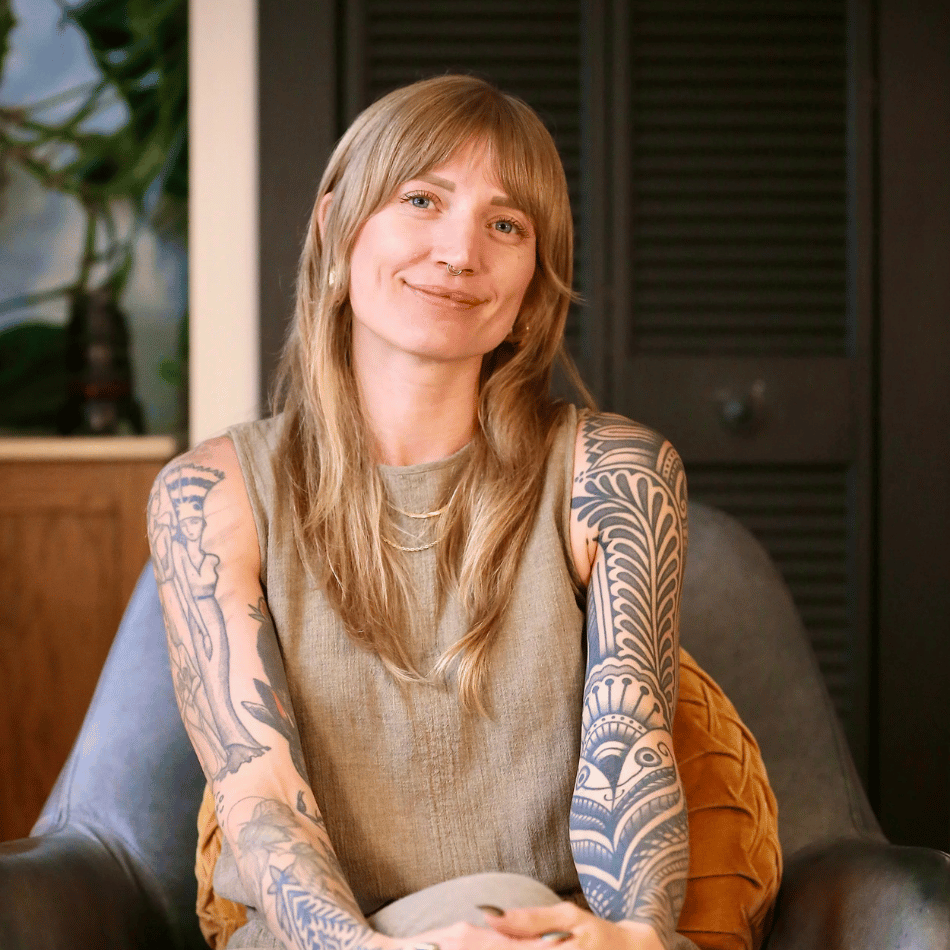
Gabriella Elise Giorgio is a Registered Associate Marriage and Family Therapist (AMFT 140682), supervised by Sharon Yu. As a late-discovered autistic person and mother, she brings a compassionate, non-pathologizing, and relational approach to helping individuals heal from childhood trauma, navigate attachment wounds, deepen self-understanding, and feel safer in their relationships and bodies. Reach out to learn more about our experienced therapists.