
Religious decolonization instead of religious deconstruction
I've been asked on consult calls by many who seek therapy for religious trauma: What do you mean by religious decolonization?

What I usually share is a succinct version of this post. So if you're looking for the TL;DR, I often say it’s a more holistic approach that intentionally integrates spirituality and cultural forces into your ever-evolving relationship with faith and God. But if you're open to a longer reflection, I invite you to read on.
My own journey of religious decolonization began when I first encountered the phrase religious deconstruction. If you grew up in the church as I did, you may remember how that phrase was often spoken about, sometimes with concern, sometimes with quiet suspicion.
For many people, the discomfort with the phrase religious deconstruction isn’t about losing faith or leaving the church. The deeper tension often comes from the way much of the deconstructing community and literature assumes that once you begin questioning your Christian faith, the inevitable destination is abandoning it altogether. The narrative can subtly suggest that once you learn the truth, the only honest response is to walk away from everything you once believed.
In many spaces, deconstruction is modeled almost like an ultimatum.
The story often sounds something like this: once you begin examining your faith, you realize you’ve been fed lies your whole life about God and the church, and so the only path forward is to renounce it all and reject anything associated with it.
For many people, that framing can feel strangely familiar, another rigid path, just pointing in the opposite direction. It can feel like being asked to throw the baby, the bathwater, the bassinet, and even the bathing rituals out all at once, one final decision, with no space to reclaim what might still hold meaning.
It’s also worth noticing that the religious deconstruction movement, particularly in the American context, has largely been shaped and pioneered by white voices. When many people read the stories and memoirs that describe these deconstruction journeys, a common thread emerges: the decision to choose individual freedom over remaining in community. For the BIPOC community, the faith community is often deeply intertwined with culture and family. Walking away doesn’t simply mean leaving a belief system; it can mean risking connection, heritage, and the social fabric that has shaped one’s life.
Religious decolonization creates space for cultural, familial, and historical nuance while still making room for relationships.
Religious deconstruction doesn't leave room for conversation - it demands severance from parts of your life that desire remembrance, grief, and lament.
Religious decolonization feels like a more congruent phrase for me in both my clinical and personal work because it names the act of disentangling colonial and oppressive theologies from the relationships that still give many of us life, whether that’s a church community, a spiritual tradition, or our relationship with God.

At its heart, it invites a deeper question, one that continues to shape my own faith, the identities I carry, and the decolonial work I’m still learning to do: What does it mean to inherit a faith that was brought to my country, Malaysia, through missionary work from the very empire that colonized it -Britain - and now find myself living in another empire, America, that continues to wield tactics of colonization and oppression in the name of Christianity?
Lastly, as a therapist, I’m also shaped by a framework called Internal Family Systems (IFS), which views a person as composed of many different “parts,” each with its own experiences, emotions, and beliefs. In this framework, there is also something called the Self: a grounded, compassionate center that can hold all of those parts with curiosity rather than letting any single one take over.
What I appreciate about this lens is that it reminds us that we can’t simply be “Self” alone. A part of us is always present when Self is present. The goal isn’t to eliminate our parts, but to have enough Self-energy so that no single part overwhelms the rest of who we are.
For example, I grew up believing that my most important identity was being a Christian, and much of my life was organized around that singular lens. As I continue on my own journey of religious decolonization, I’m learning how to honor that part of me without letting it be the only voice that defines my relationship with God, my work, church and community, my family, and the many other dimensions of my life. Other parts of me, my cultural identity, my questions, my grief, my curiosity, are also allowed to have a seat at the table. And when there is enough space for all of them, my faith begins to feel less rigid and more alive.
Religious deconstruction magnifies the 'me' in relationships. Religious decolonization, in contrast, creates space to explore where the “me” lives in relation to the many parts of my life - faith, culture, family, community, and history.
Start working with a culturally responsive IFS therapist in Highland Park, Los Angeles
For many people of color, religious deconstruction can feel less like personal liberation and more like communal rupture, another form of destruction that echoes the logic of colonization and empire. What is framed as an individual journey can, in practice, sever ties to communities that have long been sources of survival, resistance, and belonging. Religious decolonization, however, offers a different possibility: self-determination that honors your lived experiences, cultural lineage, and communal history.
For those who want to honor their roots while shedding what was never truly part of their lineage, religious decolonization offers another waym one that is deeply Self-led and honoring of the many different parts of who you are. Reach out to schedule a brief initial consultation.
Other Services Offered at Therapy on Fig
At Therapy on Fig, we offer therapy services that fit the unique needs of couples and individuals. In addition to IFS Therapy, we offer Neurodivergent Affirming Therapy, ADHD Therapy, Therapy for Entrepreneurs, Group Therapy, Therapy for Empaths, Trauma Therapy, Teen Therapy, Therapy for Asian Americans, and Autistic People. We also address related issues such as anxiety, stress management, and relationship issues. Whether you're seeking support for a specific issue or looking to strengthen your relationship overall, our therapists are here to help. Reach out today to learn more about our services.
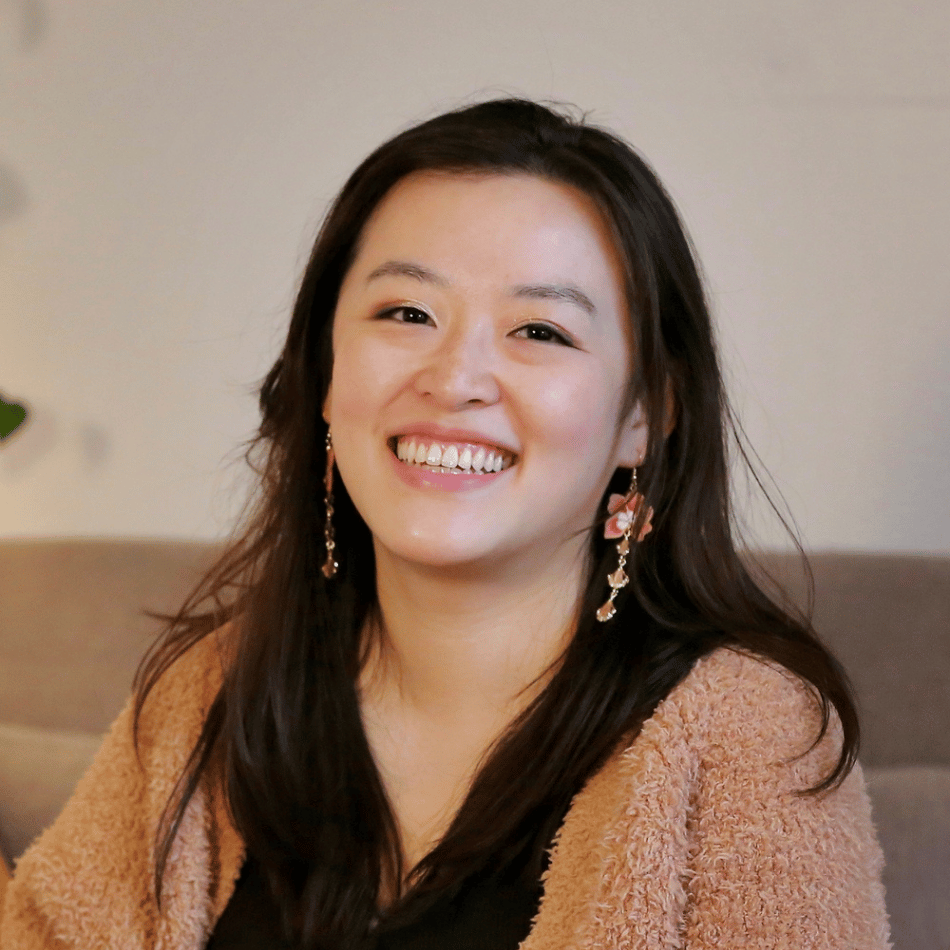
Grace Chan is an Associate Marriage and Family Therapist (#142670), supervised by Phillip Chang, LCSW #92156. She is trained in Brainspotting and Prepare/Enrich Premarital Counseling. She integrates Internal Family Systems (IFS) with creative arts therapies to support individuals and couples in deepening their connection to themselves and each other. Reach out to learn more about our experienced therapists.