Are late discovered autistic women more vulnerable to trauma bonds?
The short answer is yes, we may be more vulnerable, but the reasons why matter.

Many of us who discover we're autistic later in life have spent years adapting to chronic relational misattunement. When you've repeatedly been told you're "too sensitive" or "overreacting," it's easy to begin questioning your own experience. Over time, this self-doubt can make unhealthy relationship dynamics especially difficult to recognize, and even harder to leave.
A lifetime of being misunderstood
Many of us grow up feeling fundamentally misunderstood. Our nervous systems, communication styles, and ways of experiencing the world are often interpreted through neurotypical expectations, leading us to believe we are the problem rather than simply different.
To cope, we develop protective strategies like masking, people-pleasing, or carefully monitoring others' reactions. While these adaptations help us navigate the world and stay safe, they can also create an internal habit of looking outside ourselves for confirmation of what's real.
Trusting ourselves in relationships can become incredibly difficult.
Self-doubt is a survival strategy
A trauma bond is a powerful emotional attachment that develops within a relationship characterized by cycles of harm and repair, where periods of hurt are interspersed with moments of affection, connection, or relief. Over time, the relationship can become increasingly difficult to leave because the nervous system becomes attached to the cycle itself.
Our protective parts may begin telling a familiar story:
Maybe I misunderstood.
Maybe I'm overreacting.
Maybe they didn't mean it that way.
Maybe I just need to explain myself better.
Maybe I'm asking for too much.
Many of us become remarkably skilled at generating alternative explanations for confusing behavior. I believe this is a beautiful strength that often reflects empathy, curiosity, and a genuine desire to understand.
Yet for autistic women who have spent years learning to doubt our own perceptions, this can create a very real vulnerability to trauma bonding. We may stay engaged in cycles of hurt and repair longer than we otherwise would.
Why is it so hard to leave?
Trauma bonds aren't simply about loving someone "too much." Let’s take a brief look at the neurology taking place during a trauma bond:
Conflict or disconnection can activate cortisol and the stress response, while unpredictable moments of affection or repair engage dopamine-based reward systems. The uncertainty of when connection will return can make us increasingly focused on seeking it, while oxytocin and other bonding systems may strengthen the attachment when it does.

Disconnection → stress → anticipation → reconnection → reward & bonding → relief → repeat
Over time, the nervous system can become deeply invested in the cycle and in the hope that this time things will finally be different.
From an IFS perspective, our protective parts aren't drawn to inconsistency because they enjoy suffering. They're searching for something deeply human: attunement. After years of feeling misunderstood, even brief moments of being seen can feel profoundly meaningful.
Learning to trust yourself is healing
Healing isn't about blaming ourselves for staying. It's about understanding why our protective system adapted the way it did.
As we begin listening to our parts with compassion rather than criticism, we can slowly rebuild trust in our own experience. Over time, healthy relationships begin to feel different:
You don't have to convince yourself your feelings make sense.
Repair doesn't require abandoning yourself.
Your needs aren't treated as "too much."
Conflict leaves you feeling more understood, not more confused.
Start working with an neurodivergent affirming therapist in Los Angeles
Healthy relationships won't always feel easy, but they can feel steady enough to keep us connected to ourselves. We can be deeply attached to someone without abandoning our own experience. Reach out to schedule a free consultation.
Other services offered at Therapy on Fig
At Therapy on Fig, we provide therapy services tailored to the unique needs of couples, adults, and teens. We offer Neurodivergent Affirming Therapy, IFS Therapy, Therapy for Empaths, Trauma Therapy, Couples Therapy, Teen Therapy, ADHD Therapy, Group Therapy, Therapy for Entrepreneurs, Anxiety Therapy, Therapy for Autistic People, Depression Therapy, Premarital Counseling, LGBTQ Affirming Therapy, and CPTSD Therapy. Whether you're seeking support for a specific issue or looking to strengthen your relationship overall, our therapists are here to help. Reach out today to learn more about our services!
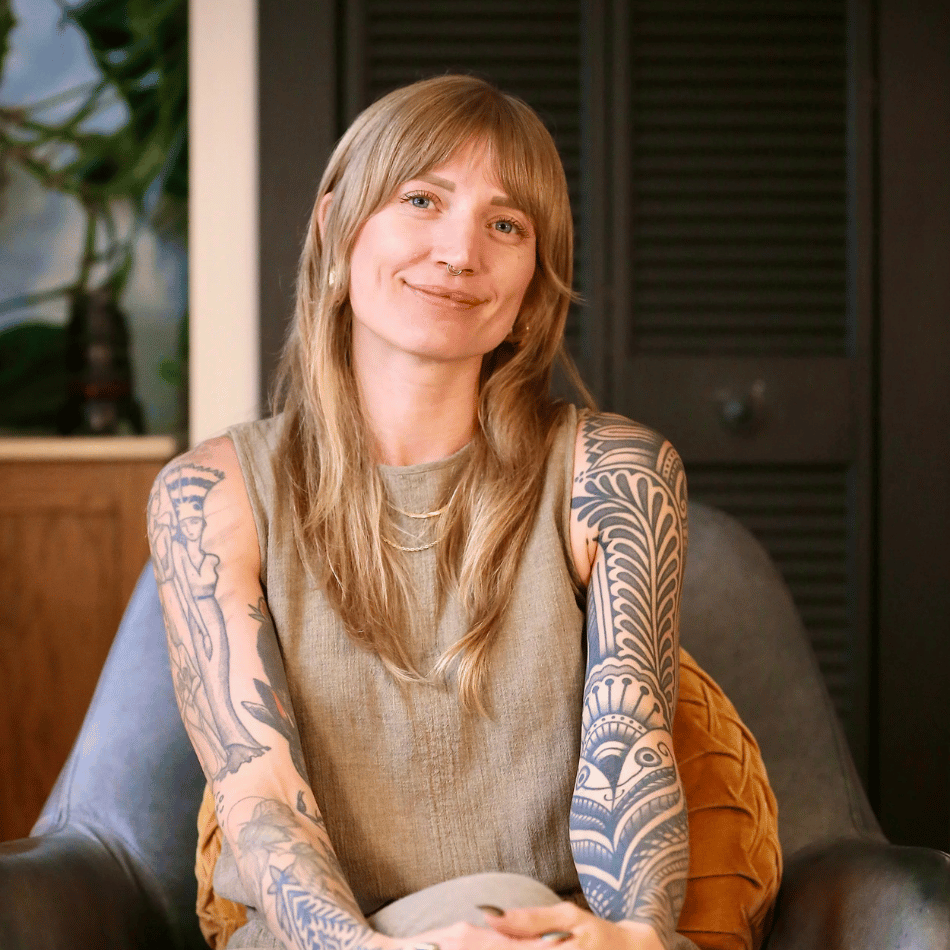
Gabriella Elise Giorgio is a Registered Associate Marriage and Family Therapist (AMFT 140682), supervised by Sharon Yu. As a late-discovered autistic person and mother, she brings a compassionate, non-pathologizing, and relational approach to helping individuals heal from childhood trauma, navigate attachment wounds, deepen self-understanding, and feel safer in their relationships and bodies. Reach out to learn more about our experienced therapists.