Trauma, (Harmful) Theology, and Healing

My clients often work with me for reasons related to their Christian faith, describing a continued stuckness after reading many Christian books in which authors propose changes or transformations that seem simple but don’t match the challenges of lived experience. Where I received my master's degree training and education - Fuller Theological Seminary - gives them hope that I can help work through this mystery.
My education is grounded in psychology and science, but also integrated with knowledge of the Christian faith and informed by the rigor of a seminary. My personal love for reading non-fiction Christian self-help books in my earlier years (i.e., Francis Chan, Tim Keller, Christine Caine, Lysa TerKeurst, etc.), combined with a lifetime of church attendance, has helped me recognize a pattern: many Christian books and teachings aren't trauma-informed.
As an Asian and immigrant/Third Culture Kid, I’d like to point out 3 different misconceptions the religious communities have about trauma and invite my clients who identify as Christians to consider how their spirituality doesn’t have to exclude psychology and trauma-informed research. An integrated healing is possible.
Trauma is stored in the body; harmful theology encourages spiritual bypassing.
Many think that coming to therapy for trauma means just working with the cognitive parts of them. If I can think differently, then I’ll feel more loved. If I can change my automatic responses, then I’ll be less angry. If I can gain more knowledge, then I’ll be wiser.
Another way to frame this misconception is to understand spiritual bypassing. The term was coined in the 1980s by John Welwood, and my paraphrasing of his definition is using spiritual experiences to ‘band-aid’ real pain. Examples include: going on church retreats but coming home stuck in the same patterns; taking Bible verses out of context to fit a ‘positive’ spin that’s relevant to your life; telling a parent that you’re hurting from a painful breakup and the parent says, ‘it’s all God’s plan’.
But because trauma is stored in your body, your brain, your genes - if you grew up in cultures that prioritize rational thinking or self-sufficiency, such as Asian culture, they’re constantly ‘bypassed’ through hyper-positive over-rationalization. Healing trauma is more than just thinking, reading, and learning - it requires embodiment, feeling, and witnessing.
Trauma makes you more susceptible to further harm; harmful theology tells you to deny your intuition.
Because traumatic experiences tend to rob you of your sense of autonomy and safety, you begin to feel like “I can’t trust myself”. And then the feelings of fear and confusion are compounded by churches and religious leaders who tell you to trust God and ‘deny yourself’.
Then we add on the complexity of being an immigrant in a foreign country, or being someone who doesn’t have a good relationship with their biological family or family-of-origin but builds a ‘church family’, being someone already in a vulnerable position due to systemic injustices - to have doubts is to betray your God, your community, your ‘family’.
So in order to stay in good graces and to be connected to my faith community, I will silence the parts of me that say ‘this feels activating’ or ‘this feels unsafe’. Furthermore, the structure of the church and rigid Christian theology can feel safe because there's simplicity in following the Bible and doing the right thing, so there’s no need to think deeper or consider alternatives.
But in order to have genuine faith, there has to be doubt; otherwise, the need for certainty becomes a strategy to control and instill fear. So when we learn to listen and invite in the parts of you that have doubts and questions, you’ll begin to hear inner wisdom and self-clarity, and maybe even the elusive Holy Spirit who works in the unknowable mystery.
Trauma creates disconnection; harmful theology forces connection at all costs.
Relational trauma requires relational healing because trauma amplifies the parts of you that feel shame and loneliness. But since shame and loneliness are often ostracized within the faith community and within ourselves, we may find that we push ourselves into a “community group” at church in hopes that it will keep us living an “acceptable” life.
While the eventual goal with healing is reconnection, sometimes we need time and space away first. Distance does not always mean giving up; it can create space for perspective and exploration. Similarly, because some Christian theology focuses on the ‘end’ where Jesus has already won all the battles, many Christians forget that we need the seasons in the desert too.
Unhealthy religiosity forces us to stay hyper-connected with a church community to be ‘stay good’; healthy spirituality allows you to wander in the desert for as long as you need to, because you were never truly alone, and community and safety will be there for you when you feel ready to return, whether that looks like a church or that looks like something completely unexpected.
Regardless of whether you seek healing from trauma in therapy or in religion or in seeking new communities, this is my hope for you as you begin to reconnect with the parts of yourself that you had to deny or were denied by others: you’ve always had free will, and you get to choose.
Start working with a religious trauma therapist in Los Angeles
Regardless of whether you seek healing from trauma in therapy or in religion or in seeking new communities, this is my hope for you as you begin to reconnect with the parts of yourself that you had to deny or were denied by others: you’ve always had free will, and you get to choose. Reach out to schedule a free consultation.
Other services offered at Therapy on Fig
At Therapy on Fig, we provide therapy services tailored to the unique needs of couples, adults, and teens. We offer Neurodivergent Affirming Therapy, IFS Therapy, Therapy for Empaths, Trauma Therapy, Couples Therapy, Teen Therapy, ADHD Therapy, Group Therapy, Therapy for Entrepreneurs, Anxiety Therapy, Therapy for Autistic People, Depression Therapy, Premarital Counseling, LGBTQ Affirming Therapy, and CPTSD Therapy. Whether you're seeking support for a specific issue or looking to strengthen your relationship overall, our therapists are here to help. Reach out today to learn more about our services!
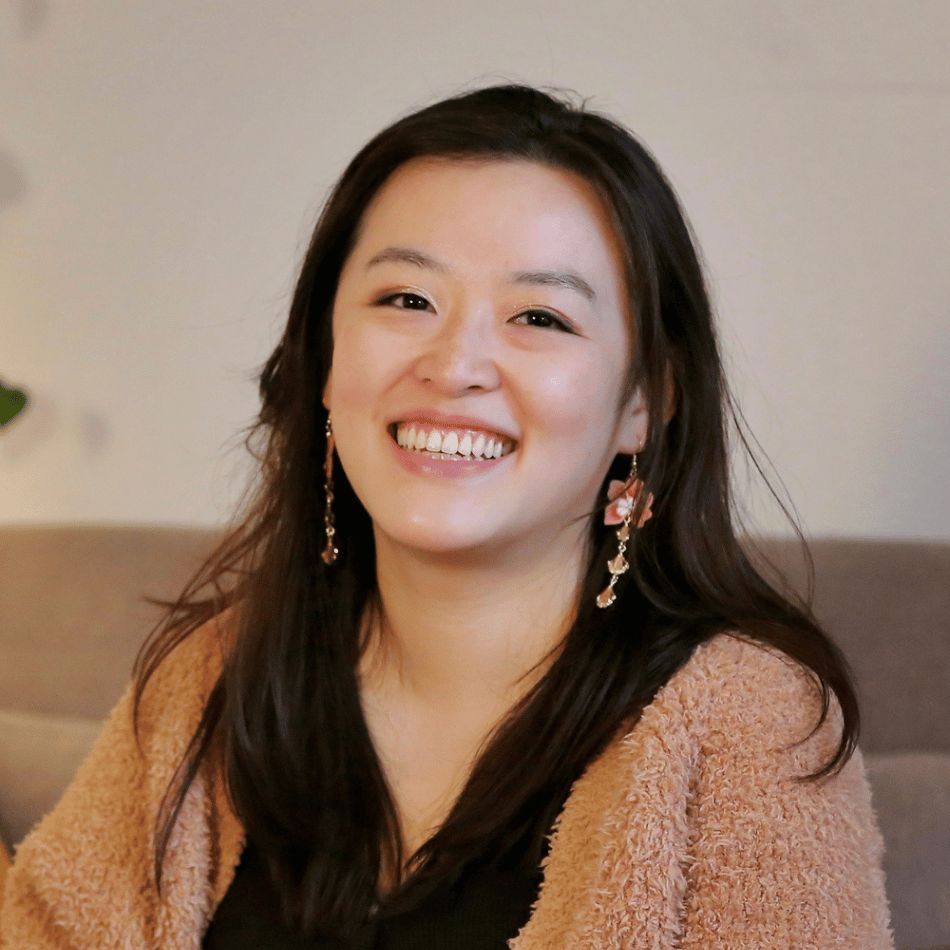
Grace Chan is an Associate Marriage and Family Therapist (#142670), supervised by Phillip Chang, LCSW #92156. She is trained in Brainspotting and Prepare/Enrich Premarital Counseling. She integrates Internal Family Systems (IFS) with creative arts therapies to support individuals and couples in deepening their connection to themselves and each other. Reach out to learn more about our experienced therapists.