Nature-Based Therapy: Your Body Wants to Be Outside

“When I am among the trees,
especially the willows and the honey locust,
equally the beech, the oaks, and the pines,
they give off such hints of gladness,
I would almost say that they save me, and daily.”
– Mary Oliver, When I Am Among the Trees
I think of this poem often, as one of the first things I do upon waking each morning is make my way outside to press my skin against tree bark. For me, it’s redwood trees, and they do save me – daily.
With an astrological chart dominated by air and water signs, I am predisposed to spending a lot of time in my feelings and in my head. I have spent most of my life waking up to a busy brain and deep, existential emotions attached to my dreamworld and this chatter in my brain.
This is why spending time in nature has become a non-negotiable medicine for me. When I step into the natural world, this chatter reliably fades into the background. When I place my hand upon a tree, my attention is immediately pulled outside of myself – noticing texture, seeing other life forms, feeling connection to something bigger than myself. My breathing slows. If you’ve ever stood at the base of a redwood tree, perhaps you know what I mean.
It is here that I feel at home – held, safe, and unconditionally welcomed, just as I am.
Exploring Inner & Outer Landscapes
As a therapist, I love exploring the unique universes each of my clients contain within. I spend most of my week sitting with clients exploring their vast inner wildernesses, understanding parts, tending to wounds, and making meaning of experiences.
And, as a therapist and nature therapy guide, I believe that this internal self-understanding is beautifully and necessarily supplemented by connection with external landscapes as well.
I like to think about healing in two directions.
One is the descent — the deep, internal work of getting to know the landscape of your soul. The other is the ascent — the remembering that you are part of a web of interconnectedness with all other living beings here on Earth.
To me, to heal is to be able to stand in the present moment, holding both of these dimensions at the same time – the stories that make you uniquely who you are, and your undeniable belonging in the family of everything – without needing to change anything.
Perhaps a controversial take in the therapy world – sometimes, we spend too much time in the descent. All systems seek balance, and it is important for us to balance the time we spend in our inner world with time spent in the outer world.
In my humble opinion, spending too much time internally is a primary culprit for existential suffering.
This is why I bring nature into my healing work. Not only does spending time with nature pull us out of our heads, into our bodies, and into connection with the outside world; it also offers a mirror for relational safety. The way we find safety in our inner wilderness is not so different from how we find safety in outer wilderness. Both ask us to slow down and listen, to lead with curiosity and reverence, and to enter into relationship.
Creating Safety With Your Body
To heal trauma, our bodies need to know what it feels like to experience safety. When we work with parts in IFS therapy, we learn that many of our parts are trying to protect us from something. Somehow, along the way, these parts learned that it’s not safe to fully stay in the present moment: “There is a threat coming around the corner, and I must protect us!”
These protective parts are not going to stand down from their duties unless they truly believe that safety is possible. And we can’t just tell them it’s possible. They need to feel it. Safety is experienced through the body. If your heart is racing, your shoulders are tight, and your breath is shallow, your body is communicating that something doesn’t feel safe—regardless of what your mind believes. So, in addition to building relationships with our parts internally, we have to show them that it actually is safe now by accessing moments of safe presence, felt in the body.
How Our Bodies Respond to Nature

When we slow down in beautiful natural spaces, physiological shifts often take place without us even trying. Our breaths soften. Our heart rates slow. We are pulled into a state of noticing: a rustling of tree leaves in the wind, warm sun on our skin, a bird soaring overhead.
This sensory engagement gently guides us out of our heads and back into our bodies – where presence truly resides. When we connect with the natural world, our bodies access presence. Spending time in nature has been shown to*:
⊹ increase feelings of happiness, awe, and wonder
⊹ increase creativity and productivity
⊹ increase sense of connection with Self
⊹ increase ability to access presence
⊹ increase calming alpha and theta brainwaves
⊹ reduce stress-related beta brain waves
⊹ reduce cortisol
⊹ reduce rumination
⊹ reduce anxiety
⊹ reduce heart rate
It makes sense. According to a study by the EPA, the average American spends 93% of their time indoors. This isn’t natural, and is relatively new in the lifespan of our species. Of course, our bodies feel a sigh of relief when we come back to Earth. And – good news – you don’t have to spend a week backpacking to feel these effects; even just a 20-minute walk outside has been linked to increased feelings of calm, creativity, and connection.
Presence isn’t something that just feels good. It regulates us. When we access this presence, our parts begin to say, “I guess we’re safe right now. I can take a break from working so hard.” and eventually, with repeated exposure to this safety, our parts might begin to trust that we will continue to create moments of safety, and they can choose to step into other roles instead.
Ways to Bring Your Healing Outside
If this post has piqued your curiosity, I encourage you to spend 20-minutes outside. You can walk, or sit in one place, but try not to listen to music or a podcast. Simply be present with your surroundings, and notice what you notice. Check in with yourself: How did you feel before? How do feel after?
Nature-based therapy is a gentle, guided practice of attuning to your senses, your body, your inner experience, and the world around you. If you’ve been feeling stuck in your head, burnt out, or overwhelmed, this work may offer a beautiful support to traditional therapeutic containers.
If you’re curious about how to more deeply integrate the natural world into your healing journey, below are a few current nature-based offerings:
⊹ Pockets of Presence: These are 2-hour group gatherings held outdoors featuring a blend of nature therapy, mindfulness, and somatic exercises, and sound healing. These gatherings are intended to support you in calming your nervous system, quieting the mind, and finding present connection with Self, nature, and community. Pockets of Presence gatherings are offered as single-time drop-ins. Read more about these here.
—> Recommended for individuals experiencing anxiety, scattered thoughts, burnout, or a desire for connection with others.
—> Location: Griffith Park/Topanga Canyon.
⊹ IFS Intensives: I hold 3-hour IFS Intensives in nature for deeper tending to your system. Read more about these here.
—> Recommended for individuals currently held in a therapeutic container and looking to deepen their work, particularly with childhood wounds or complex relational trauma. Experience with the IFS model is helpful.
—> Location: Topanga Canyon.
⊹ 1:1 Sessions: I offer 1-hour private sessions outdoors for ongoing weekly clients. These can be walk-and-talks, or seated sessions with options for narrative processing, guided meditation, teaching somatic techniques for nervous system regulation, or sound healing. Sessions with me are always IFS informed and held in an intuitive and relational container.
—> Recommended for individuals holding grief or heartbreak, moving through life transitions, experiencing anxiety/panic, or simply seeking a safe place to be human
—> Location: Griffith Park/Topanga Canyon.
Take Your Healing Outside Today 🌿
Here at Therapy on Fig, we have trained therapists and nature-therapy guides that can safely support you attuning your nervous system to the rhythms of the natural world. Follow the steps below to book nature-based offering today:
Reach out to schedule a free consultation.
Speak with non-pathologizing therapist that specializes in holding these outdoor containers.
Remember what it feels like to truly be in the present moment, today ♥︎
Other Services Offered at Therapy on Fig
At Therapy on Fig, we provide therapy services tailored to the unique needs of couples, adults, and teens. We offer Neurodivergent Affirming Therapy, IFS Therapy, Therapy for Empaths, Trauma Therapy, Couples Therapy, Teen Therapy, ADHD Therapy, Group Therapy, Therapy for Entrepreneurs, Anxiety Therapy, Therapy for Autistic People, Depression Therapy, Premarital Counseling, and LGBTQ Affirming Therapy. Whether you're seeking support for a specific issue or looking to strengthen your relationship overall, our therapists are here to help. Reach out today to learn more about our services and to begin your path to healing, agency, and peace.
Sources
Kerr, J., Sallis, J. F, Saelens, B. E, Cain, K. L, Conway, T. L, Frank, L. D, & King, A. C. (2012). Outdoor physical activity and self rated health in older adults living in two regions of the U.S. International Journal of Behavioral Nutrition and Physical Activity, 9(1). doi:http://dx.doi.org/10.1186/1479-5868-9-89 Retrieved from https://escholarship.org/uc/item/84b2x4bf
Klepeis, N., Nelson, W., Ott, W. et al. The National Human Activity Pattern Survey (NHAPS): a resource for assessing exposure to environmental pollutants. J Expo Sci Environ Epidemiol 11, 231–252 (2001). https://doi.org/10.1038/sj.jea.7500165
Li Q, Kobayashi M, Kumeda S, Ochiai T, Miura T, Kagawa T, Imai M, Wang Z, Otsuka T, Kawada T. Effects of Forest Bathing on Cardiovascular and Metabolic Parameters in Middle-Aged Males. Evid Based Complement Alternat Med. 2016;2016:2587381. doi: 10.1155/2016/2587381. Epub 2016 Jul 14. PMID: 27493670; PMCID: PMC4963577.
Li Q, Morimoto K, Nakadai A, Inagaki H, Katsumata M, Shimizu T, Hirata Y, Hirata K, Suzuki H, Miyazaki Y, Kagawa T, Koyama Y, Ohira T, Takayama N, Krensky AM, Kawada T. Forest bathing enhances human natural killer activity and expression of anti-cancer proteins. Int J Immunopathol Pharmacol. 2007 Apr-Jun;20(2 Suppl 2):3-8. doi: 10.1177/03946320070200S202. PMID: 17903349.
Shanahan, D., Bush, R., Gaston, K. et al. Health Benefits from Nature Experiences Depend on Dose. Sci Rep 6, 28551 (2016). https://doi.org/10.1038/srep28551
Sifferlin, Alexandra. “Why Spring Is The Perfect Time to Take Your Workout Outdoors.” Time, Time, 30 Mar. 2017, time.com/4718318/spring-exercise-workout-outside/.
White, M.P., Alcock, I., Grellier, J. et al. Spending at least 120 minutes a week in nature is associated with good health and wellbeing. Sci Rep 9, 7730 (2019). https://doi.org/10.1038/s41598-019-44097-3
Williams, Florence, director. The Nature Fix - What Happens When You Spend Just 5 Minutes in Nature? YouTube, YouTube, 3 Feb. 2017, www.youtube.com/watch?v=iwQkTuhId-o&t=86s.
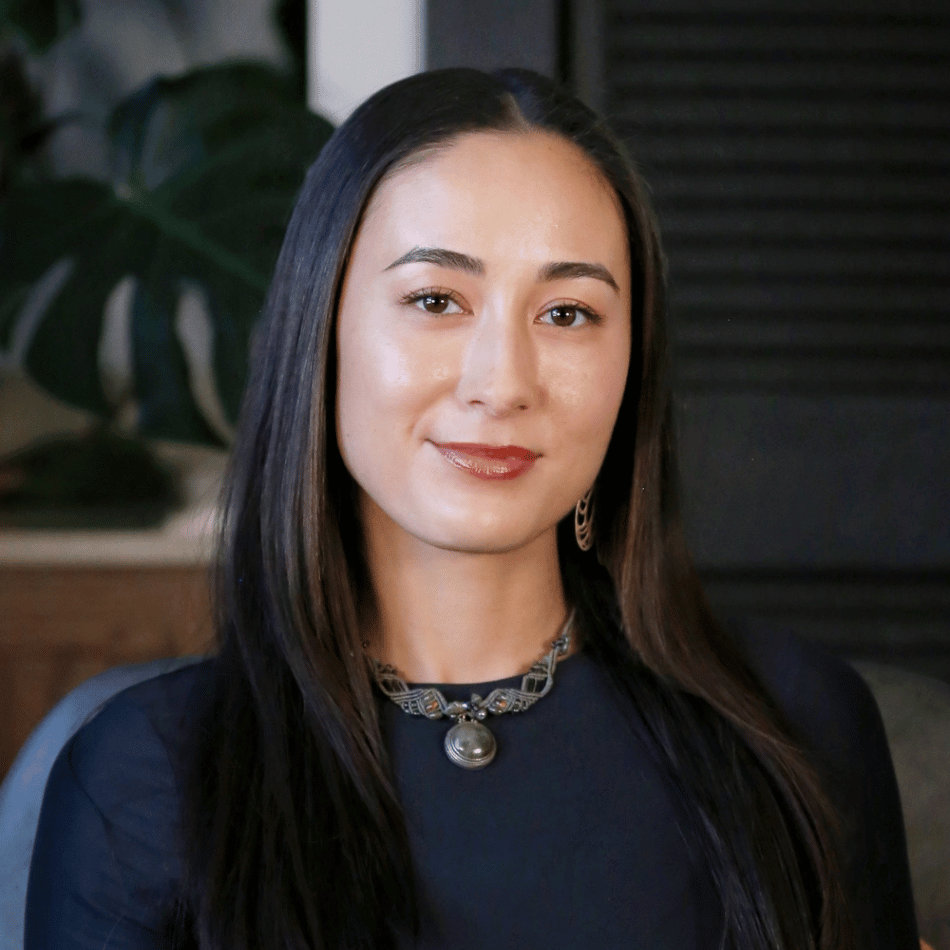
Marina Mendes is a Registered Associate Professional Clinical Counselor (#15511) supervised by Sharon Yu, LMFT (#50028). As a mixed-race Asian American queer woman, introvert, and Highly Sensitive Person, my healing work is shaped by a deep understanding of what it means to feel "othered." I support individuals who feel misunderstood, embrace multifaceted identities, and value multicultural awareness. Reach out to learn more about our experienced therapists.